

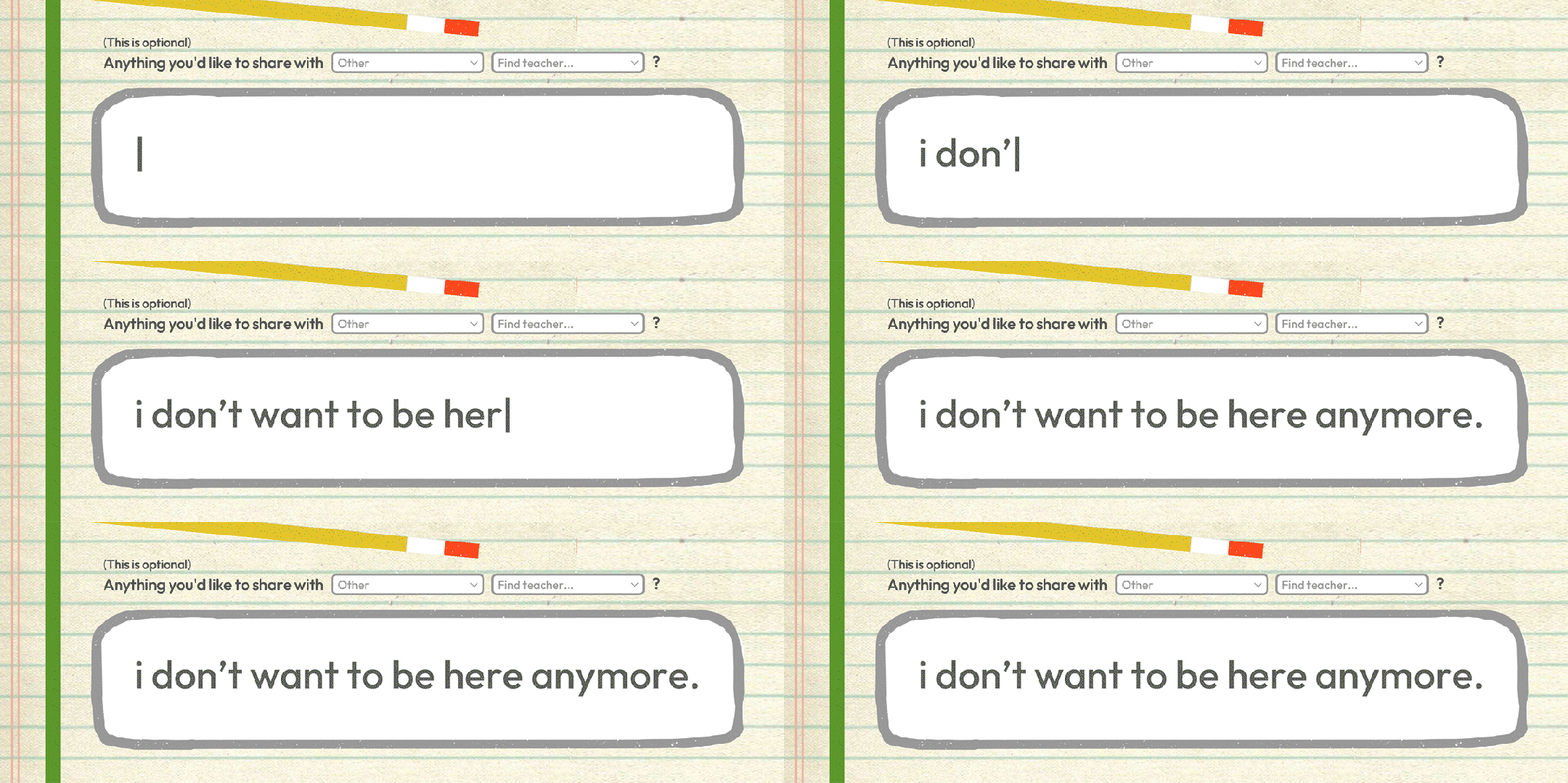
In Gary, Indiana, a fourth-grade student typed “I don’t want to be here anymore.” The SEL coordinator saw it within minutes and initiated crisis intervention.
In Lansing, Illinois, teachers noticed students consistently low-energy for weeks, not just having bad days. They could intervene early.
In South San Antonio, Texas, a second-grade teacher read a student’s note about something happening at home that might have otherwise gone unnoticed.
Different states. Different grade levels. Different situations.
Same pattern: When students have a safe place to share what they’re experiencing, they tell you what they need.
The Students Who Stay Silent
Robin Sizemore, SEL/Mental Health Coordinator in Gary, saw something surprising: how many students were struggling silently.

“Staff thought they knew which students needed support. Daily check-ins revealed students who were ‘fine’ in class but struggling significantly.”
Maria, a second-grade teacher in South San Antonio, sees it with younger students:
“Many student notes are private situations that might happen at home or away from school. They give me a glimpse of what is happening in their lives away from school.”

“Many student notes are private situations that might happen at home or away from school. They give me a glimpse of what is happening in their lives away from school.”
The quiet ones. The ones who said “I’m good” when teachers asked. The ones who would never walk into a counselor’s office—but will share in writing when they know someone cares enough to read and respond.
What Changes for Educators
Michael Earnshaw, Principal at Oak Glen Elementary in Lansing:

“Teachers and social workers have been able to identify and address issues through student check-ins and help students work through issues before they become something bigger.”
Before they become something bigger, that’s the shift. Kenneth Byrne, Support Programs Coordinator in Lansing:
“Teachers have been able to use student check-in data to diffuse situations before they escalated into something more significant.”

“Teachers have been able to use student check-in data to diffuse situations before they escalated into something more significant.”
Charlie Gallardo, Director of Guidance and Counseling in South San Antonio:

“It gives teachers a real-time window into student emotional well-being. This helps us catch concerns early and we can step in with support before things escalate or become bigger issues.”
The pattern across every role: before escalation, before bigger issues, before crisis.
Prevention, not just crisis response.

The Difference Between Caring and Infrastructure
Every school in these stories had caring educators before implementing daily check-ins.
What they didn’t have was the infrastructure to make that caring actionable.
Caring without visibility means missing students in crisis. You can’t help students you don’t know are struggling.
Caring without student voice means relying on adult observation. Some students mask brilliantly.
Caring without real-time information means delays that can matter desperately in a crisis.
Infrastructure doesn’t replace caring. It makes caring more effective.
What Creates Voice
These districts built three things:
A low barrier for students to share.
Typing in a private message box? Students share things in writing they’d never say out loud.
Someone actually sees it and responds.
When messages reach the right people immediately, students learn their voice matters. They keep using it.
Patterns become visible over time.
One concerning check-in might be a bad day. Three weeks of declining mood is a student who needs intervention.
Create these conditions, and students start telling you what they need before you have to guess.
The Stories That Don’t Get Told
Robin’s story about the fourth-grader is dramatic. Life-or-death. The kind that gets attention.
But most stories aren’t that dramatic.
They’re the seventh-grader whose pattern of declining mood got noticed before crisis. The third-grader who mentioned friend drama and got peer mediation before escalation. The high schooler dealing with family stress who got connected to resources.
Students who didn’t become tragedies because infrastructure caught them early.
Those stories don’t get told because nothing terrible happened. And that’s exactly the point.
The Question for Your District
If a student in your district is in crisis today—right now—do they have a way to share that with someone who can help immediately?
Not eventually. Not if they’re brave enough to ask. Not if a teacher happens to notice.
Today. Immediately. To the right person.
If the answer is no, you don’t have an awareness problem. You have an infrastructure problem.
Because the students who need help the most? They’re usually the ones least likely to ask.
Call to Action
Author Bio


Recent Comments